
Types of Advertising
Let's learn about the different types of advertising! Advertising helps companies tell people about their products or services. There are many types, each with its own features and benefits.
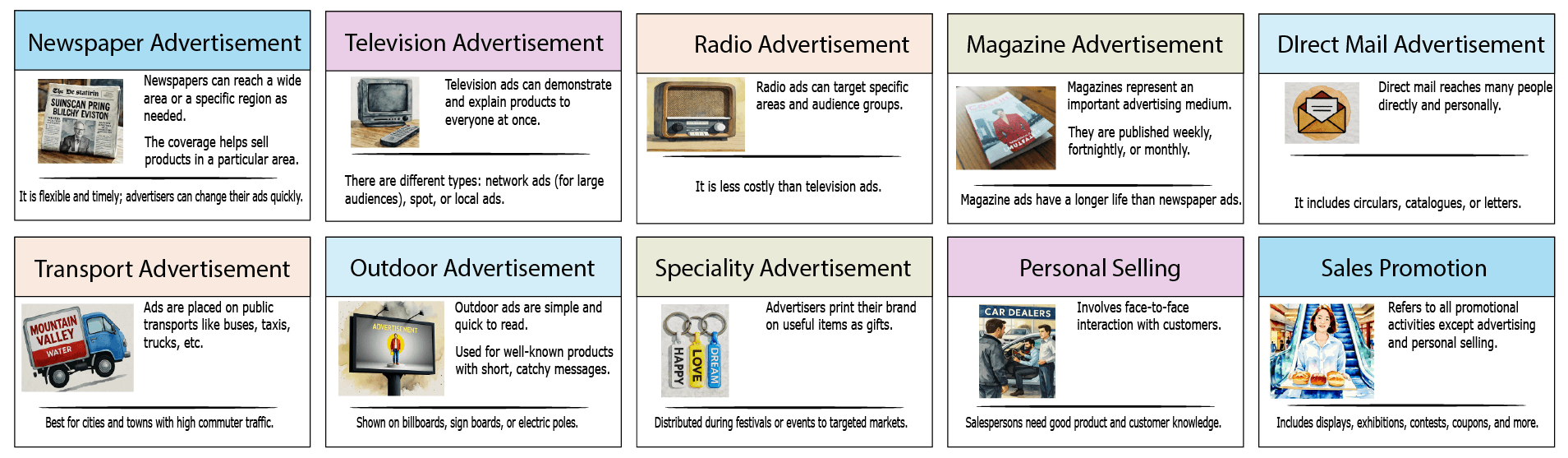
1. Newspaper Advertising
Key Points:
- Newspapers can reach a wide area or a specific region as needed.
- The coverage helps sell products in a particular area.
- It is flexible and timely; advertisers can change their ads quickly.
Elaboration: Newspaper advertising targets audiences who read newspapers daily. Advertisers can decide exactly where their ads will appear, such as in a city or a specific part of the country. If a company wants to announce a special offer, they can quickly create or update their ad for the next day's issue. This makes Newspapers a powerful choice for businesses needing quick communication.
Examples:
- A clothing store in Delhi advertises a weekend sale in the city's local newspaper.
- A new restaurant uses newspapers to inform people about its grand opening.
- An electronics shop promotes its Diwali discounts through newspaper ads.
2. Television Advertising
Key Points:
- Television ads can demonstrate and explain products to everyone at once.
- There are different types: network ads (for large audiences), spot, or local ads.
Elaboration: Television advertising is one of the most dynamic methods! Companies can show their products in action. This helps customers understand how the product works. Advertisers can choose between showing their ad across the country (network), only in certain cities (spot), or on local channels.
Examples:
- A shampoo company shows a commercial on national TV during prime time.
- A local bakery advertises its cakes on city TV channels.
- A sports brand launches its new shoes during a cricket match telecast.
3. Radio Advertising
Key Points:
- Radio ads can target specific areas and audience groups.
- It is less costly than television ads.
Elaboration: Radio advertising helps reach people who may not watch TV or read newspapers. It is effective for targeting regional audiences. Messages can be in local languages and suit the listeners' culture. Radio ads cost less than TV ads, making them affordable for smaller businesses.
Examples:
- A tuition center advertises its summer classes on a local FM channel.
- A local bakery promotes its morning breakfast offers through the radio.
- An auto-rickshaw service runs ads targeting commuters during morning hours.
4. Magazine Advertising
Key Points:
- Magazines represent an important advertising medium.
- They are published weekly, fortnightly, or monthly.
- Magazine ads have a longer life than newspaper ads.
Elaboration: Magazine advertising helps reach specific groups, like students, homemakers, or professionals. As magazines are kept and read over a longer period, the ad may be noticed more than once. High-quality visuals make magazine ads attractive.
Examples:
- A fashion brand advertises in a popular lifestyle magazine.
- A computer company runs ads in technology magazines.
- A travel agency places an ad in a monthly travel magazine.
5. Direct Mail Advertising
Key Points:
- Direct mail reaches many people directly and personally.
- It includes circulars, catalogues, or letters.
Elaboration: Direct mail advertising targets specific customers with letters, brochures, or special offers sent to their mailboxes. This is very personal and can be customized according to interests. It helps businesses create a direct relationship with customers.
Examples:
- A grocery store sends weekly flyers with discounts to neighborhood houses.
- A clothing brand mails seasonal catalogues to loyal customers.
- A furniture store sends special invitation letters for new launches.
6. Transportation Advertising
Key Points:
- Ads are placed on public transports like buses, taxis, trucks, etc.
- Best for cities and towns with high commuter traffic.
Elaboration: Transportation advertising places messages where lots of people can see them while traveling. People on the road or in public transport will notice these ads often, making them memorable.
Examples:
- A telecom company advertises new plans on the side of city buses.
- A coaching center puts ads on auto-rickshaw backs.
- An e-commerce website promotes itself with posters on metro trains.
7. Outdoor Advertising
Key Points:
- Outdoor ads are simple and quick to read.
- Used for well-known products with short, catchy messages.
- Shown on billboards, sign boards, or electric poles.
Elaboration: Outdoor advertisements are seen by people when they're outside, like walking or driving. Since one only gets a few seconds to look, the message must be attractive and easy to remember. Common techniques include big visuals, slogans, and logos.
Examples:
- An ice cream brand uses billboards near schools.
- A mobile phone brand displays its logo and slogan on bus stop signs.
- A toothpaste company puts up large, simple ads on highways.
8. Speciality Advertising
Key Points:
- Advertisers print their brand on useful items as gifts.
- Distributed during festivals or events to targeted markets.
Elaboration: Speciality advertising involves giving away items like calendars, pens, bags, or T-shirts with the advertiser's name. This is especially common during festivals like Deepawali or at the start of the new year. Such items remind customers of the brand every time they use them.
Examples:
- A paint company gives wall calendars to contractors during New Year.
- A sweets shop distributes branded keychains at Deepawali.
- A stationery brand hands out pen sets to schools.
9. Personal Selling
Key Points:
- Involves face-to-face interaction with customers.
- Salespersons need good product and customer knowledge.
Elaboration: Personal selling is a direct, one-to-one approach where the salesperson talks to customers. Salespeople can answer questions, explain features, and persuade customers to buy. They also collect feedback about customer preferences.
Examples:
- A salesperson at a watch store demonstrates features to a family.
- A vacuum cleaner company sends representatives to homes for live demos.
- Car dealers have agents who assist customers and answer questions in the showroom.
10. Sales Promotion
Key Points:
- Refers to all promotional activities except advertising and personal selling.
- Includes displays, exhibitions, contests, coupons, and more.
Elaboration: Sales promotion encourages customers to buy quickly or try something new. It may include buy-one-get-one-free offers, coupons, lucky draws, or special displays in stores. These activities create excitement and attract more customers.
Examples:
- A shampoo brand offers a free sample with every purchase.
- A supermarket holds a lucky draw for shoppers during a festival.
- A confectionery company gives trading coupons with every chocolate pack.
Scenario Based Questions
-
Scenario: A new electronics shop is opening in your town. The owner wants to reach as many local people as possible, quickly and cheaply.
- Question: Which type of advertising should the owner choose, and why?
- Answer: The owner should choose newspaper advertising. It covers a wide local area quickly, is flexible, and is cost-effective for reaching town residents.
-
Scenario: A famous food brand is launching a new instant noodles flavor nationwide.
- Question: Which advertising method will help them show how to cook and enjoy the noodles to the most people at once?
- Answer: Television advertising would be the best. It allows the brand to demonstrate cooking visually to a large audience nationwide.
-
Scenario: A language tuition center wants to advertise its weekend spoken English classes to parents listening while driving.
- Question: Which advertising type would be suitable and why?
- Answer: Radio advertising would be suitable. Many parents listen to the radio during commutes and can easily hear about the center’s classes.
-
Scenario: A toothpaste company’s logo appears on wall calendars given to dentists before New Year.
- Question: What type of advertising is this, and what is its benefit?
- Answer: This is speciality advertising. It keeps the brand in sight throughout the year whenever the calendar is used, reminding dentists and their patients of the brand.
-
Scenario: A company has launched a "Buy 1, Get 1 Free" offer on its cold drinks for summer.
- Question: Which advertising category does this fall under and what effect does it have?
- Answer: This is an example of sales promotion. It encourages quick buying, increasing sales during the summer season.